LEED v5 Scoring, Embodied Carbon & Submittal Management — In One Platform
Built for LEED v5. Materials & Resources and Embodied Carbon are first-class scoring domains in the engine — not retrofits.
Taking a project to LEED v5? Still
reconciling calculator workbooks,
EPDs, and submittal emails by
hand?
Project teams lose countless hours moving
product data between SMDS workbooks,
USGBC calculators, document folders, and
inboxes — re-keying the same submittal three
times and hoping the numbers still agree at
submission.
Sound familiar? Teams tell us they
face:
– One calculator workbook per project,
endlessly reconciled
– Embodied carbon data scattered across
EPDs and spreadsheets
– Reviewer feedback buried in email threads
– EPDs, HPDs, and FSC certificates filed by
hand — and refiled for every project
– Version drift between what was calculated
and what was submitted
– AIA Materials Pledge reporting as a second,
parallel effort
What is Green Canary for LEED v5?
Green Canary is a single home for everything a LEED v5 project team tracks — product
submittals, embodied carbon, manufacturer
certifications, and reviewer feedback. It runs the calculations, keeps the documentation
organized, and produces submission-ready
USGBC paperwork on demand, replacing the
patchwork of spreadsheets and inboxes that has slowed certifications for years.
Capabilities at a glance
– Complete MR scoring engine. Per-product
scoring across all nine MRc4 nonstructural
categories rolls up to Low-Emitting Materials
percentages, BPSP criteria scores, and project
point totals.
– Embodied carbon, end to end. MRp2
prerequisite, MRc2 Options 1 (WBLCA), 2 (EPD
product lines), and 3 (construction emissions) — including USGBC’s combined cap across
options.
– AIA Materials Pledge built in. All five
Sustainability Pillars scored side by side with
LEED credits — one workflow produces both
LEED documentation and pledge evidence.
– SMDS import. Drag in the workbook GCs
already produce; submittals, manufacturers,
subcontractors, and documents populate in
seconds
– Always-on Document Pool. EPDs, HPDs,
Declare labels, and FSC certificates shared
across every project, auto-matched to imported submittals, every version retained.
– Real submittal workflow. Draft →
Approved / Rejected / Superseded / Withdrawn, with inline reviewer notes, resubmission in place, and a notifications queue that finds the right reviewer.
– Permissions that scale. Four per-project
access levels and three tenant tiers — from a
single subcontractor to a multi-site portfolio.
– USGBC-ready export. Official calculator
workbooks generated with static, pre-computed values — no formulas, no version drift.
– Score Dashboard & Executive PDF. Live
point totals, MR and ECC subscores, and a
client-ready summary with a dedicated AIA 2030 Commitment section.
What This Means to Your Firm
– Calculations done for you — instant,
consistent scoring across the whole project
portfolio
– Fewer review comments — reviewers see
the exact USGBC format they expect, every
time
– One workflow, two outcomes — LEED
documentation simultaneously produces AIA
Materials Pledge evidence
– Enter product data once — the same
submittal feeds every credit, pillar, and report it touches
– Transparent scoring — every point traces
back to the products, documents, and decisions behind it
– Nothing gets lost — revisions, status
changes, and edits are kept permanently
– Built to evolve — new credits and rating-
system updates land without disrupting projects
in flight
Williams & Dame Development estimated
over $100,000 in savings on a single hotel
project from eliminated LEED change orders and reduced documentation time.
“The ability to track and organize this
information is critical to successfully
attaining construction credits.”
Race Clark, PM — Hoffman Construction
Multnomah County Central Courthouse
Project Architects
Firms running multiple LEED v5 certifications concurrently — especially practices reporting against the AIA Materials Pledge who want one platform covering both commitments.
Sustainability Consultants
Specialists who shepherd submittals through
approval and need the live state of every credit area on every project, at a glance.
Add a Title Here
Contractors who own the SMDS workbook and need a frictionless way to push submittal data straight into the certification pipeline.
Status at a glance
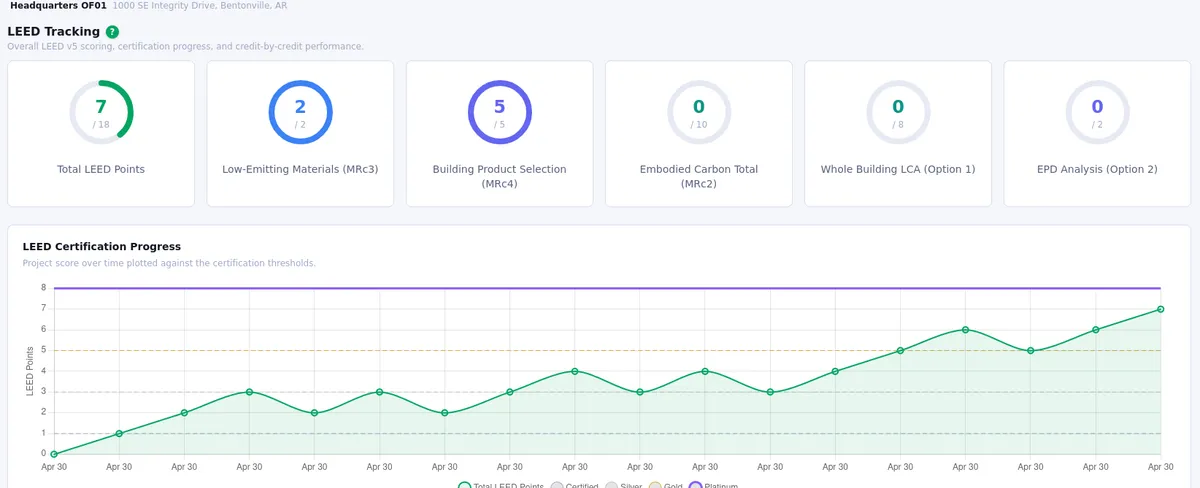
The compliance dashboard shows the primary LEED score points as graphs. A historical total visualizes project progress.
Low-emitting materials and AIA Pledge
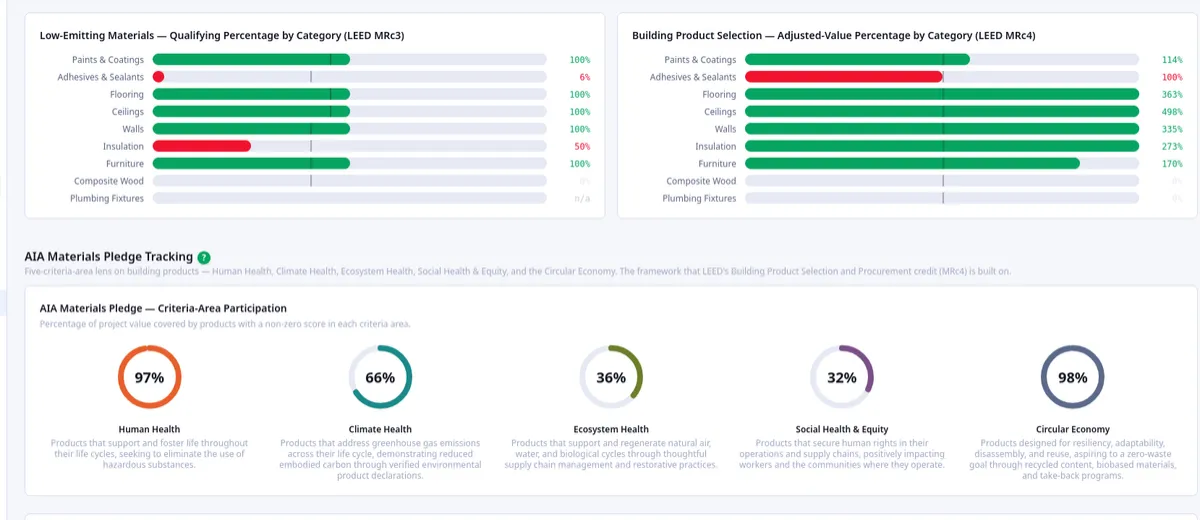
Quickly spot indoor-air-quality problems. Track status of points towards the AIA Materials Pledge.
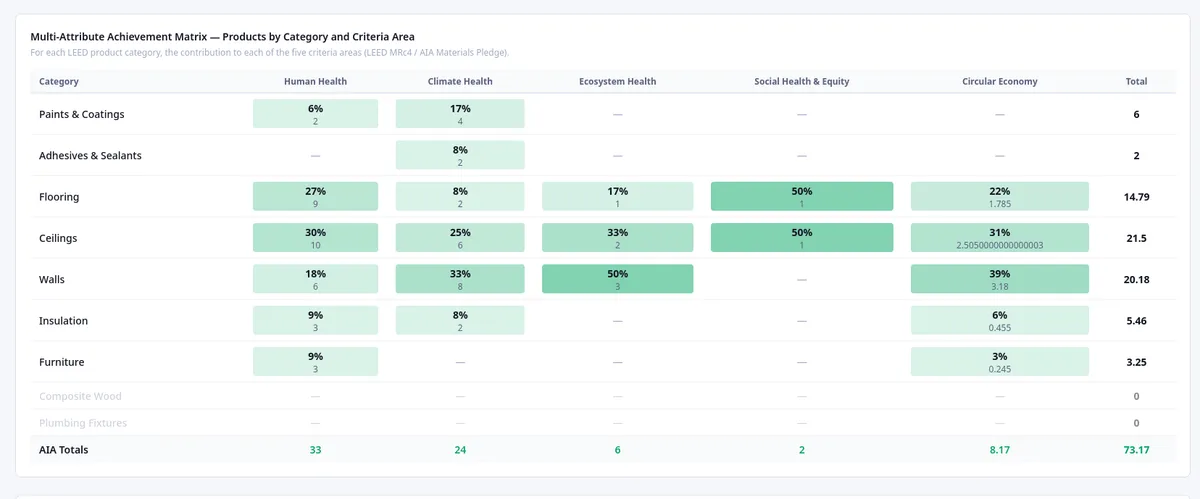
Multi-Attribute Performance
Visual representation by color intensity.
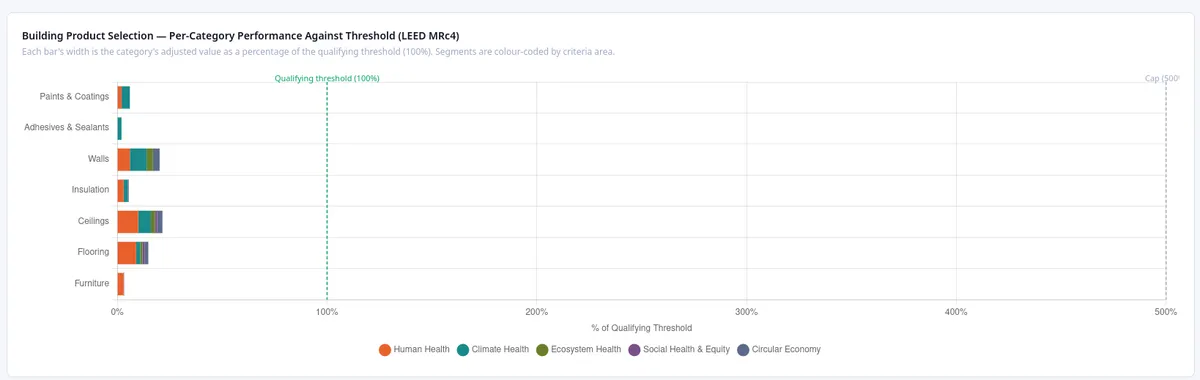
Building Product Selection
Progress towards certification thresholds.
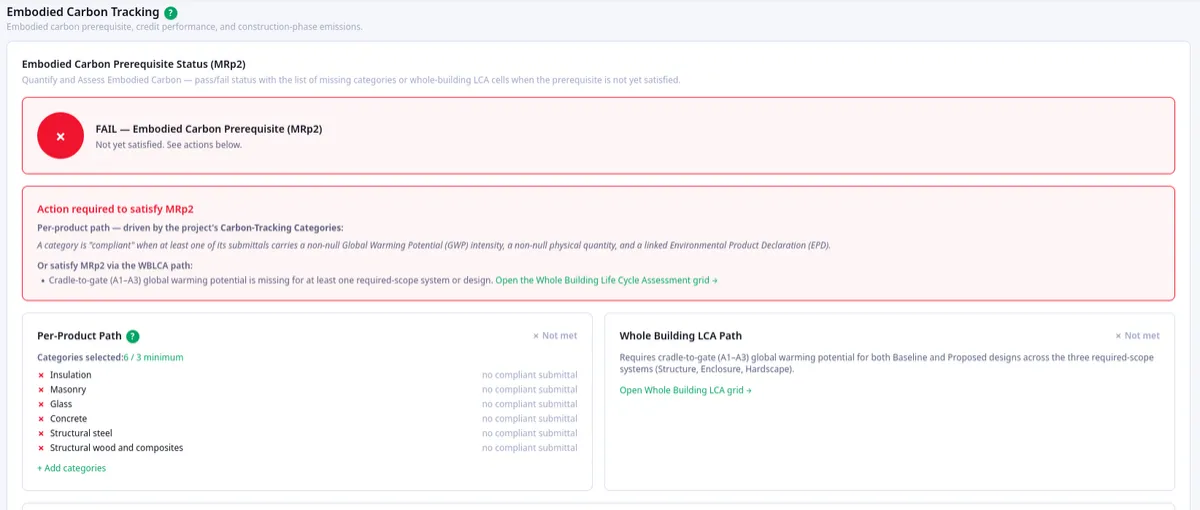
Carbon and Global Warming
Carbon tracking and Global Warming Impact. Import and score data from EC3.
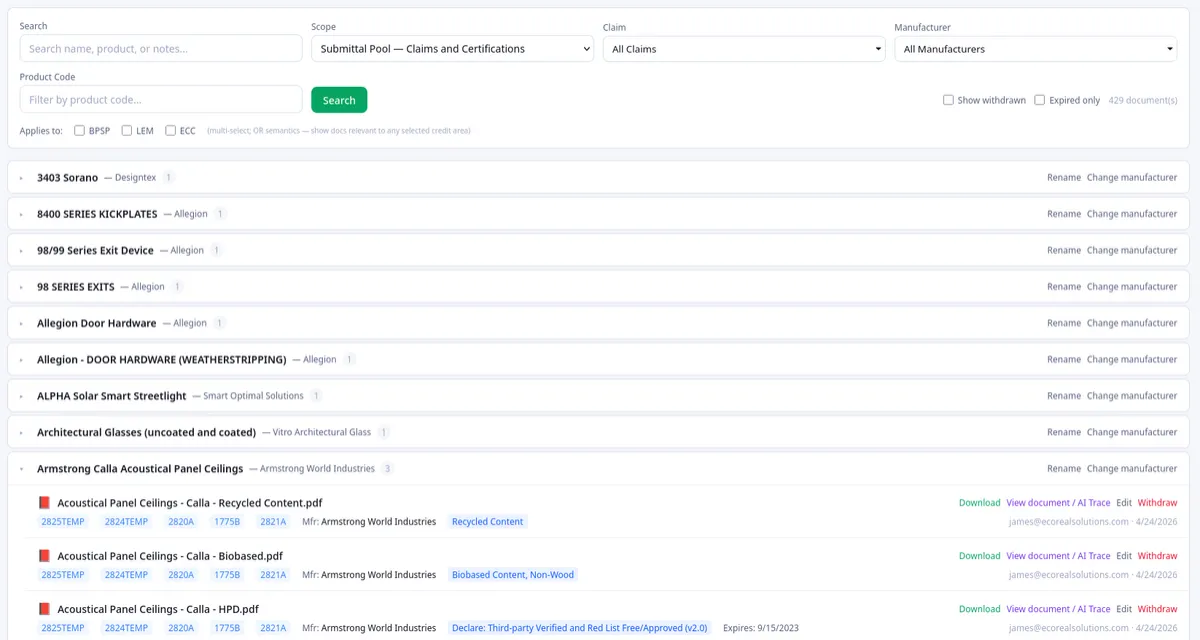
Support document manager
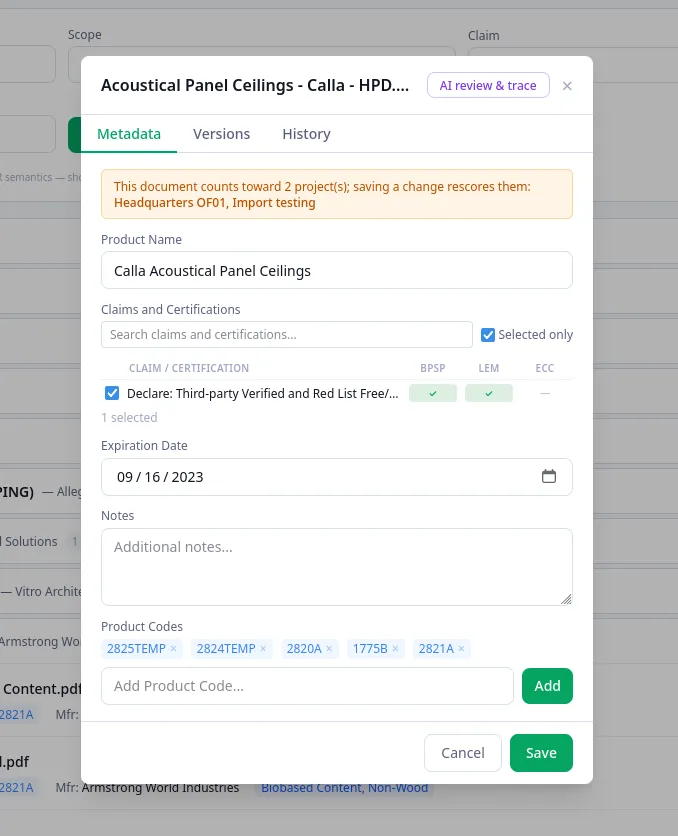
Support Document Pool for all Projects. Documents grouped by Product/Product-family with metadata including certificate experation dates.
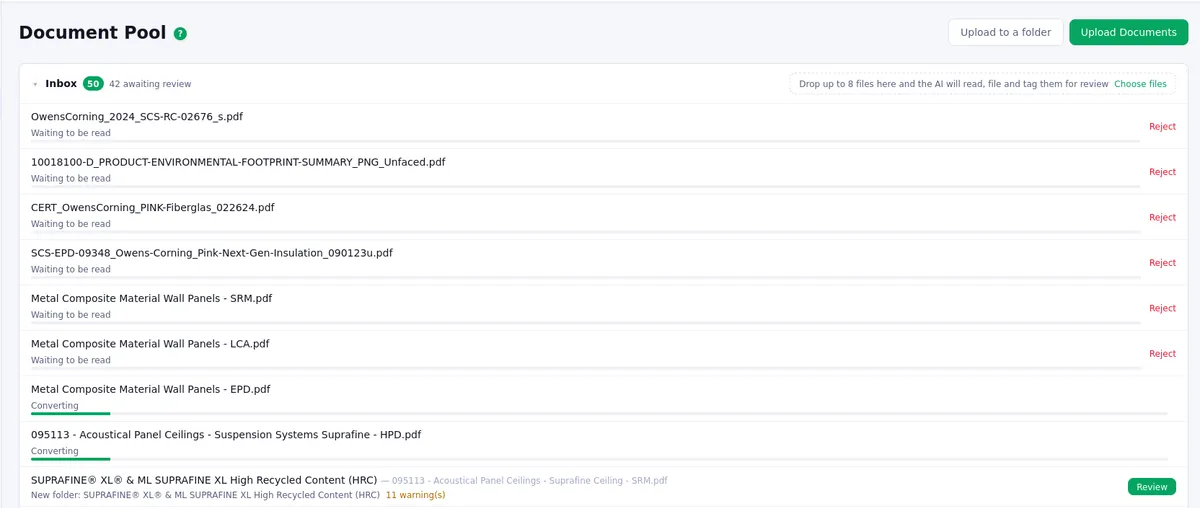
Document Automation
Document inbox automatically extracts metadata and proposes organization. AI extraction of the metadata and name, on approval routed to the product folder.
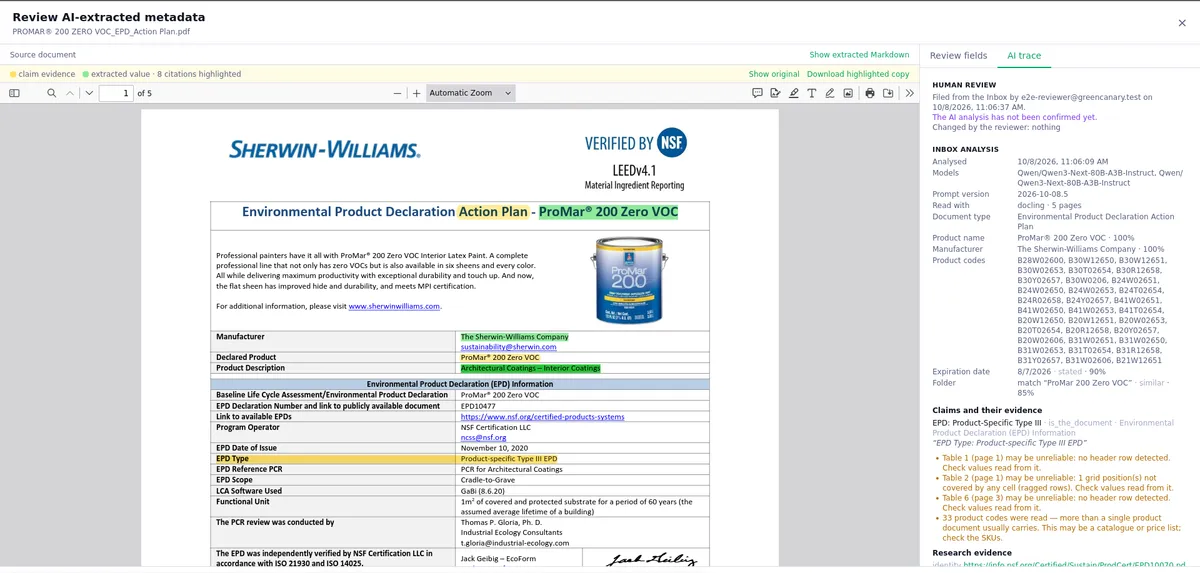
Review extracted metadata
Data extracted by AI analysis requires human review, needed corrections, and approval.
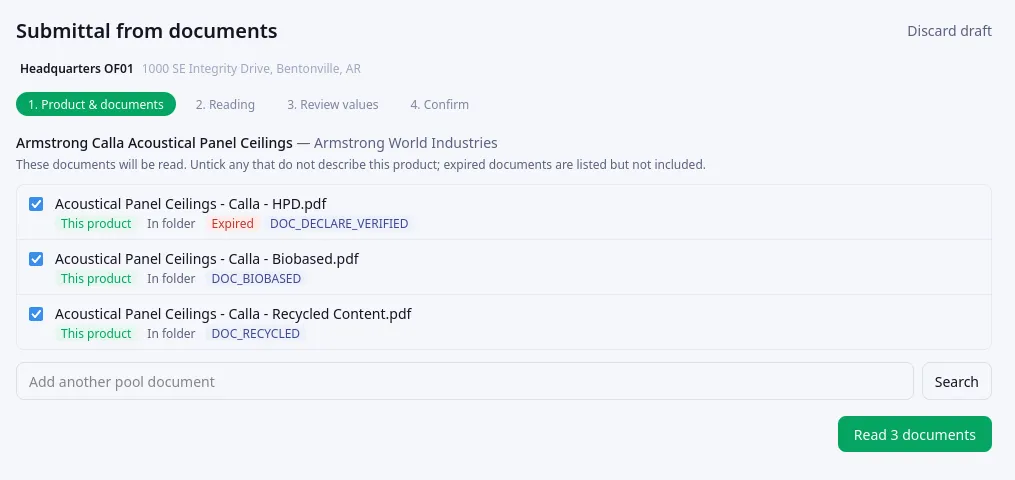
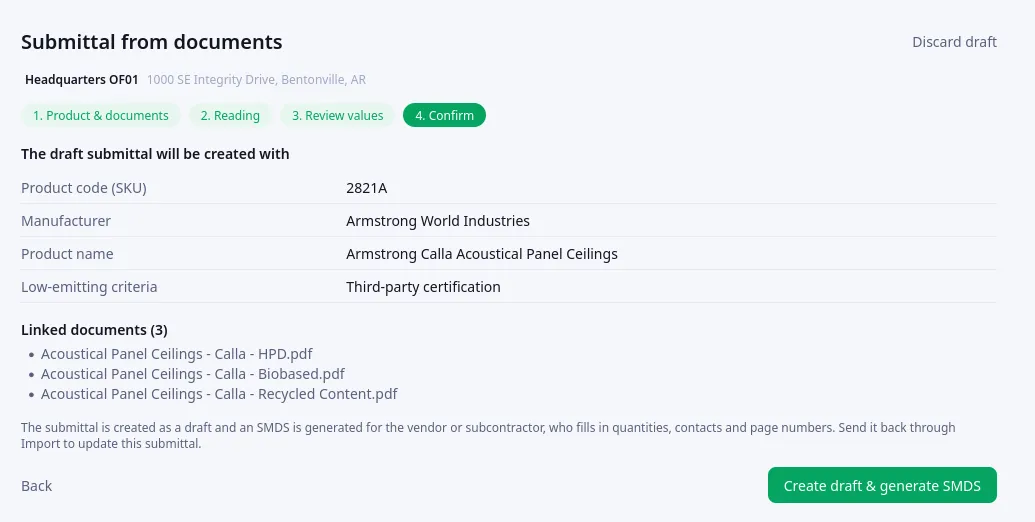
Create a new Submittal from Documents
Select from the Document Pool, and automate creation of a Submital from data in product documents.
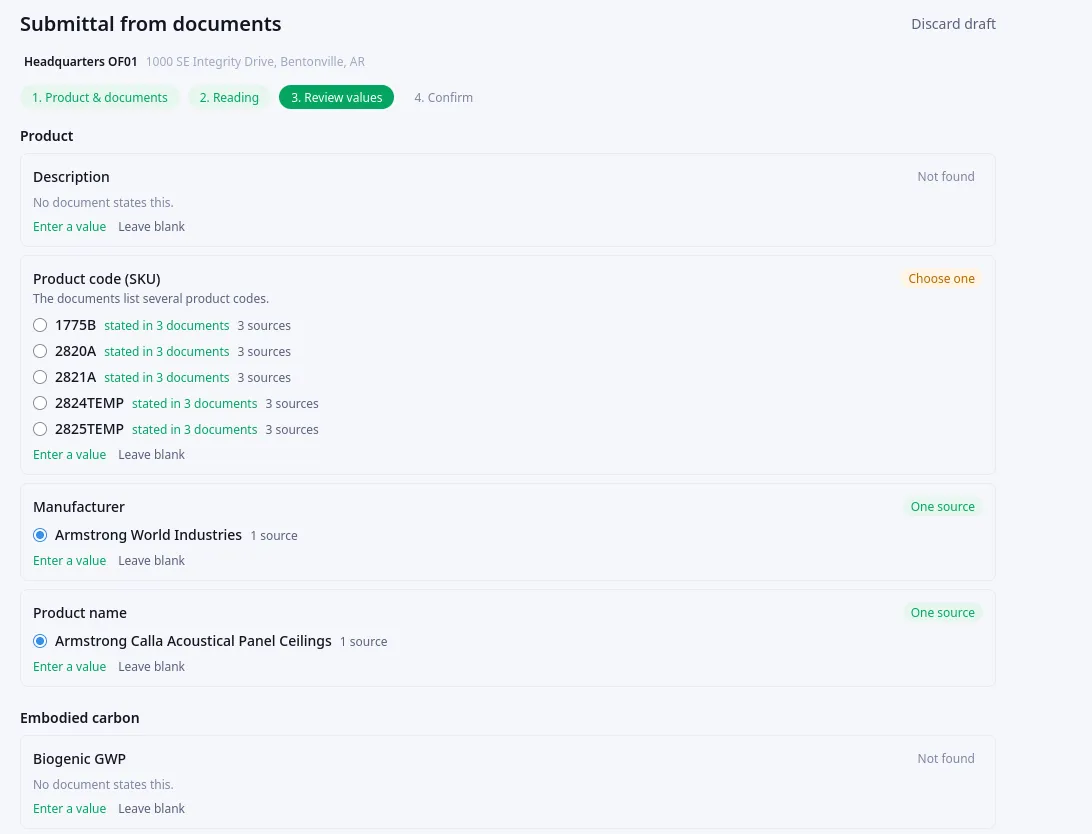
Review extracted values
AI extracted information from the selected documents is presented for human review. Select from multiple options identified, ex. Product Code. Manually correct any errors.
Create Submittal from extracted information
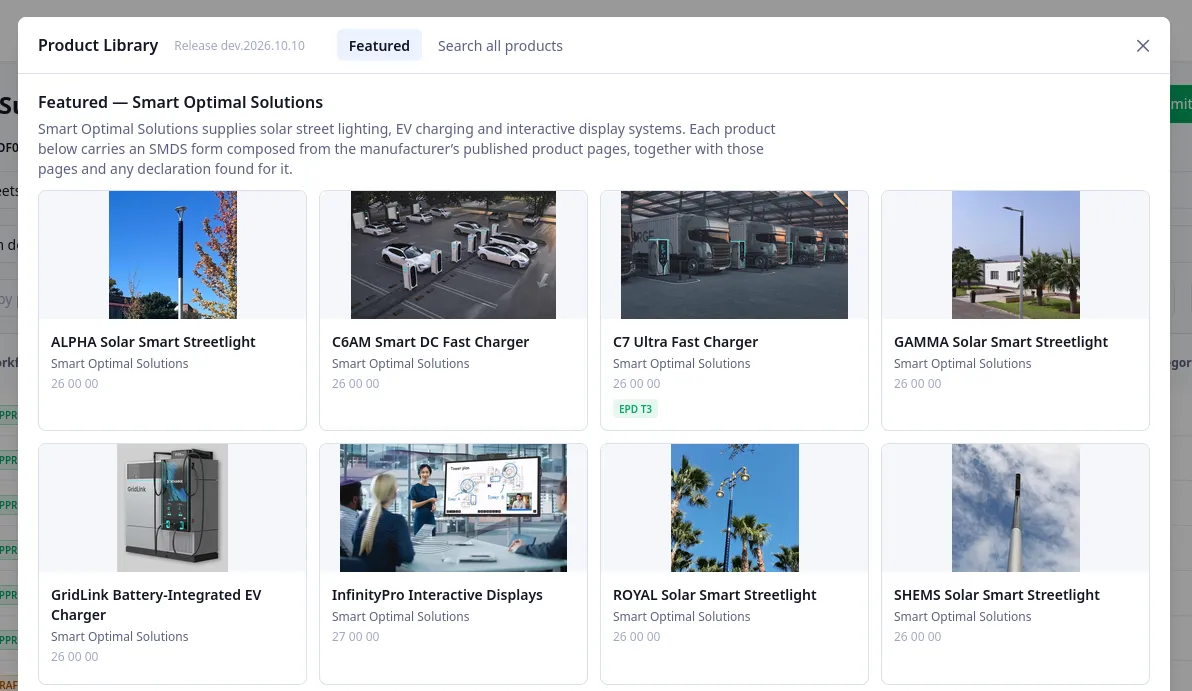
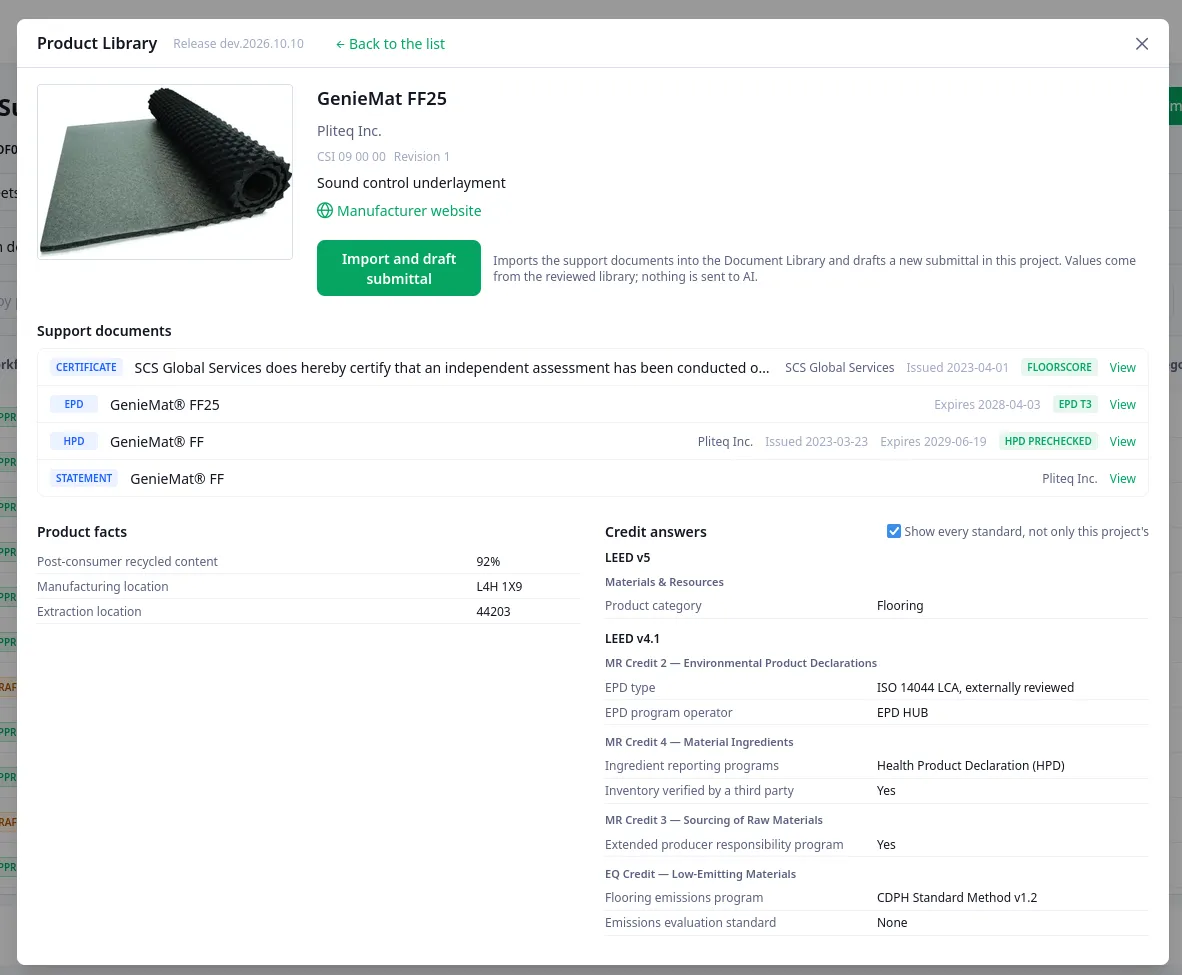
Curated Product Library
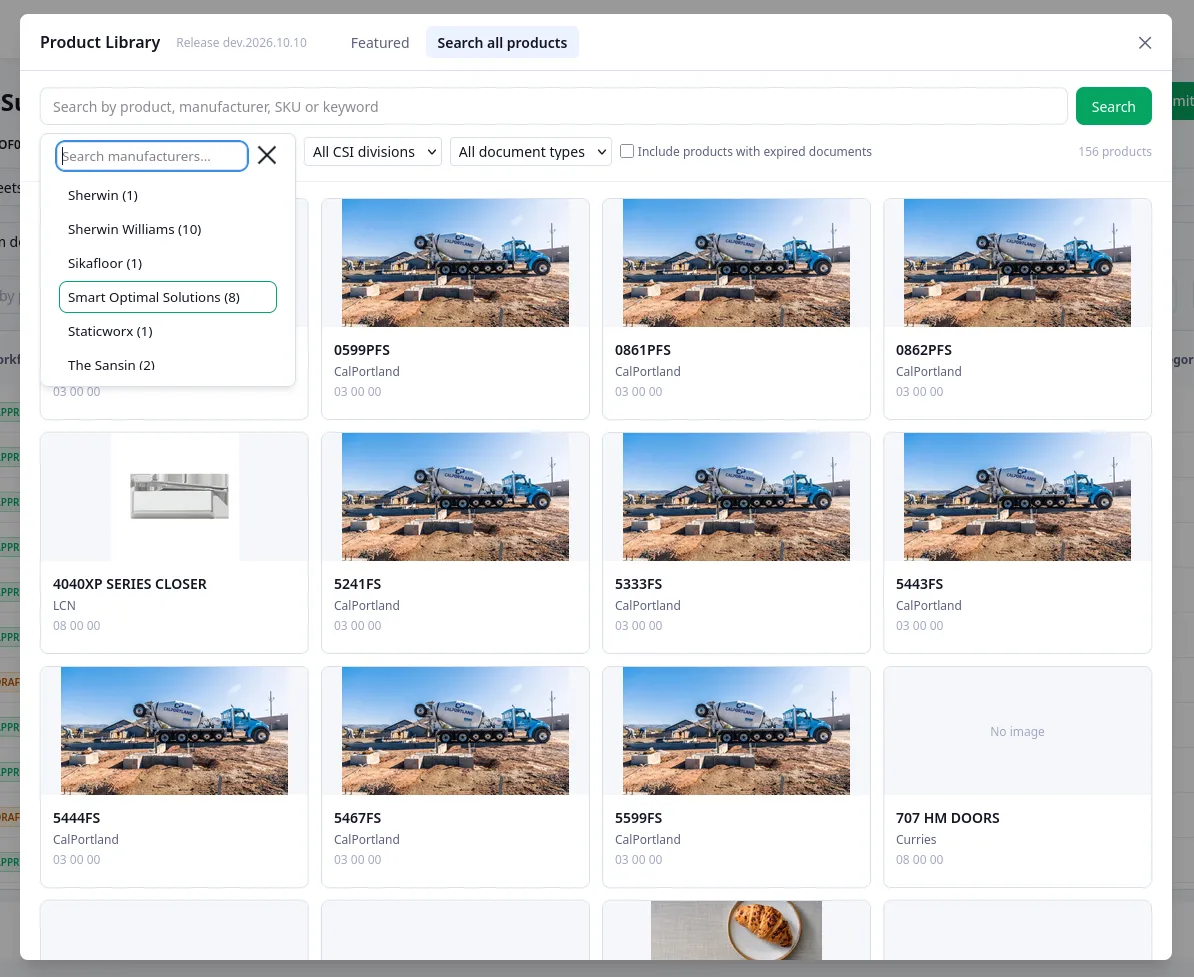
Green Canary maintains a human curated corpus of product and material information with appropriate documentation.
Search by multiple filters
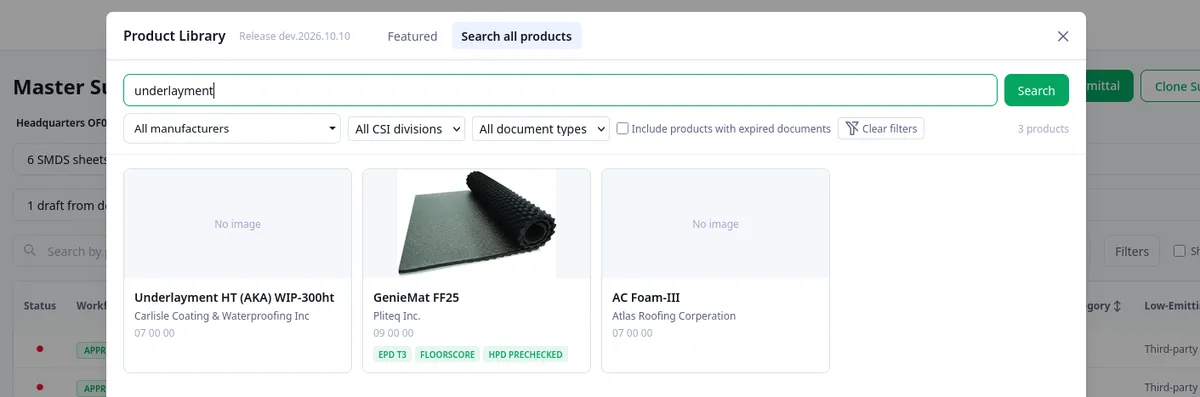
Review Product
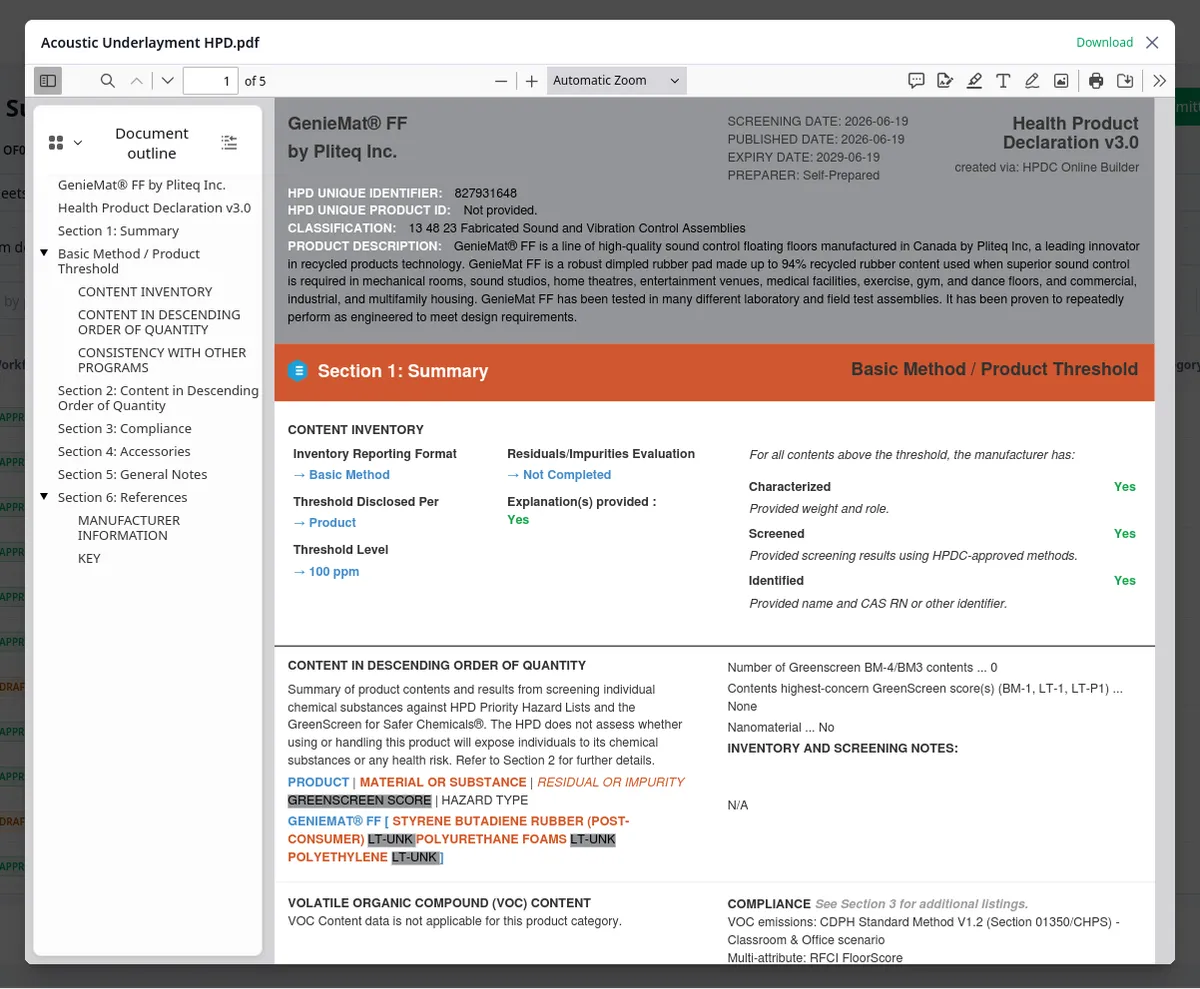
View details about a product in the Library. Program related sustainability information summarized. Preview the documents provided.
On selecting a Product the Submittal is drafted and the support documents copied into the Document Pool.
Accuracy you can trust
Verified against USGBC. Outputs are checked against USGBC’s own calculator workbooks before any release — if the numbers don’t match, it doesn’t ship.
Enterprise-ready hosting. Enterprise-grade cloud infrastructure with single sign-
on, role-based access, and secure
document storage.
A full audit trail. Your team, your auditor,and your client all see exactly how every
point was earned — with the samesupporting evidence.
Quick Links
Company
Get In Touch
© Copyright 2026. Green Canary Software LLC. All rights reserved.